Student Inventions That Go the Distance: From an Idea to a Licensing Agreement, and a Global Marketplace
Inventionland Education’s Innovation Science course is not a traditional science class. It’s an immersive, hands-on experience that transforms students from passive learners into active inventors. It guides them through the full journey of innovation and invention right in the classroom.
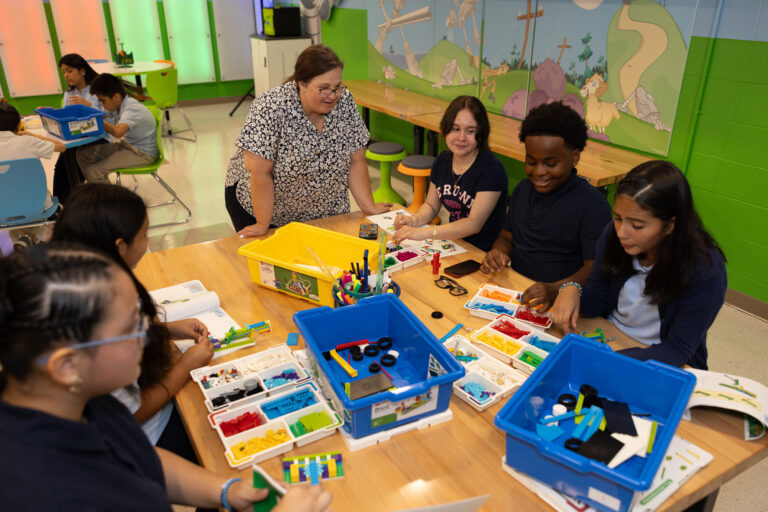
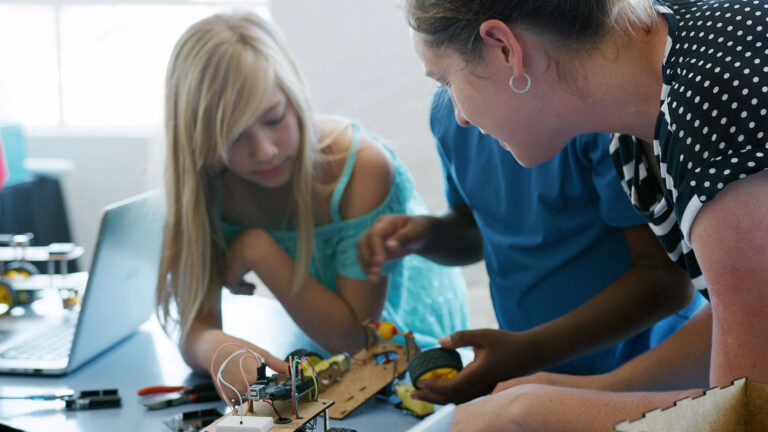
 At the heart of the course is the Inventionland 9-step inventing method that mirrors how real-world inventors and product developers work. Students begin by identifying everyday problems, the kinds of frustrations people experience but rarely stop to solve. From there, they move through brainstorming, concept development, sketching, testing, refining, and ultimately prototype creation and final product pitching.
But Innovation Science doesn’t stop at building something that works. Students also learn crucial soft skills such as communication, problem-solving, collaboration, and the value of teamwork. They craft compelling pitches that explain the problem, their solution, how it functions, and why it matters. In other words, they learn how to think like entrepreneurs.
 The results are impressive. Many student teams don’t just create clever classroom projects; they produce prototypes at the local, regional, and national levels. Some have even progressed beyond competition to earn actual licensing agreements, demonstrating that their ideas have real commercial potential, some in the global marketplace.


One of the latest examples comes from Grove City Middle School, where students Ethan Cooke, Elijah Lawson, and Gavin Purdy developed an invention called the “Needle Guard.”
Their idea addresses a common frustration for athletes: losing or breaking the small pump needle used to inflate sports balls. Whether it’s a basketball, soccer ball, football, or volleyball, the tiny needle can easily snap, bend, or even get lost inside the ball during inflation.
 The Needle Guard is designed to prevent that from happening. Their solution helps protect the needle from breaking and keeps it from slipping into the ball in the first place. It’s a simple concept, but one rooted in real-world experience and thoughtful problem-solving.
What makes this achievement especially meaningful is not just the invention itself, but the process behind it. These students didn’t stumble upon a product idea by chance. They applied innovation principles, collaborated as a team, tested their thinking, and refined their prototype into something competition-ready.
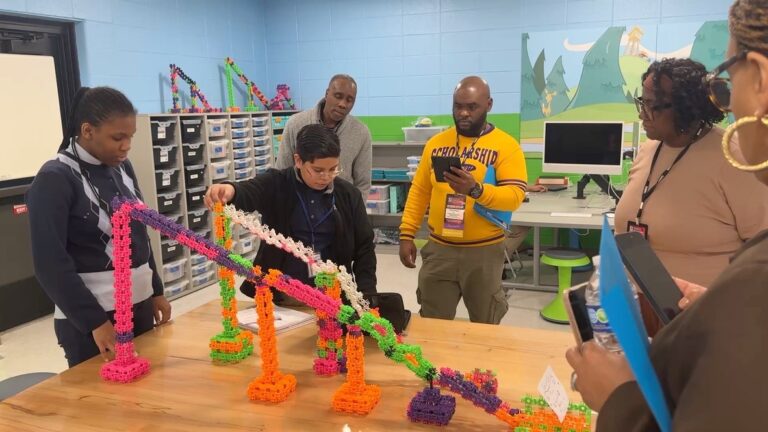
That’s the power of Innovation Science.
Students gain confidence in their ability to solve problems. They learn resilience through iteration. They discover how creativity connects to engineering, design, and entrepreneurship. And in some cases, they see firsthand how an idea born in a classroom can evolve into a product with marketplace potential.
When education moves beyond memorization and into invention, students don’t just learn science. They put innovation and invention front and center.